Medical Credentialing Company Strategies For Urgent Care Scaling
On this page
Medical Credentialing Company helps urgent care organizations manage provider enrollment, credentialing, documentation, renewals, and payer requirements in a structured process. This gives teams better visibility into provider status and readiness.
Credentialing becomes more demanding as urgent care groups add providers and locations. Delayed applications, incomplete records, expired credentials, or missed follow-ups can slow provider activation, affect claims, and create operational delays.
This guide explains how a Best Medical Credentialing Company supports urgent care growth, required documents, enrollment tracking, common challenges, and key factors when choosing a credentialing partner.
What Strategies Does a Medical Credentialing Company Use?
Medical Credentialing Company can centralize provider data, payer enrollment, document verification, follow-ups, and renewals into one organized workflow, reducing reliance on spreadsheets, emails, and manual tracking.
- Standardized credentialing checklists
- License and certification verification
- Payer-specific requirement tracking
- Application status monitoring
- Deadline and renewal management
- Missing document and payer request identification
Organizations can use Medical Credentialing Company Tips for Success to improve workflow control while keeping processes flexible for different payer requirements, specialties, locations, and expansion schedules.
How Can a Medical Credentialing Company Support Urgent Care Scaling?
Partnering with a Medical Credentialing Company supports urgent care scaling by connecting provider enrollment tasks directly with the expansion calendar.
Expansion Timeline Alignment
- Work backward from opening dates to set credentialing priorities.
- Ensure essential providers are approved before patient care begins.
Operational Dependency Tracking
- Map internal onboarding directly against external payer approvals.
- Prevent gaps between provider readiness and billable care.
Centralized Data Management
- Standardize application tracking and renewal dates across locations.
- Eliminate administrative errors during rapid team expansion.
Integrated Workflow Execution
- Connect provider credentialing with overall revenue-cycle processes.
- Monitor multi-site provider status through a managed system.
Medical Credentialing Services follow the same rule: align dependencies, standardize data, and ensure full provider readiness before go-live.
Can a Medical Credentialing Company Improve Enrollment Tracking?
Partnering with a Medical Credentialing Company improves enrollment tracking by establishing clear ownership, status visibility, and defined timelines across every provider application.
Step 1: Application Status Assignment
- Defined Ownership: Assign a specific status, owner, deadline, and next action to every provider file.
- Real-Time Visibility: Help administrators easily identify pending applications, missing documents, and final approvals.
Step 2: Multi-Location Data Centralization
- Progress Comparison: Compare enrollment status across multiple sites without relying on individual email updates.
- Record Accuracy: Maintain clear documentation when payers query submission dates or requested information.
Step 3: Post-Submission Monitoring
- Follow-Up Documentation: Log payer responses, contact attempts, and expected completion dates continuously.
- Approval Tracking: Record official approval dates, effective dates, and participation restrictions accurately.
Step 4: Revenue Cycle Integration
- Dental Billing Alignment: Connect structured enrollment processes directly with broader administrative workflows.
- Medical Billing Synchronization: Align provider participation details with downstream claims administration to protect reimbursement.
Documenting complete enrollment details gives operations teams current, actionable information to guide operational decisions.
What Documents Does a Medical Credentialing Company Need?
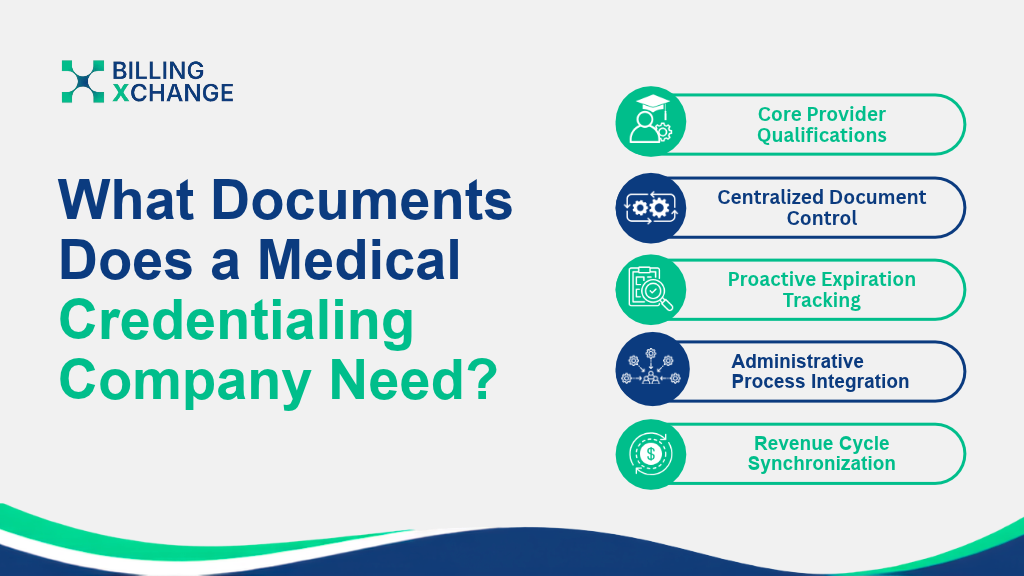
Medical Credentialing Company requires accurate provider data and documentation to verify qualifications. Because requirements vary by payer, state, and specialty, teams must confirm specific rules before submitting applications.
1. Core Provider Qualifications
- Accurate Data Collection: Gather complete provider details and supporting documents to verify professional qualifications.
- Requirement Verification: Confirm payer, state, and specialty rules before submitting applications to a Medical Credentialing Company.
2. Centralized Document Control
- Standardized Checklists: Use a centralized checklist to identify missing files and information gaps prior to submission.
- Delay Prevention: Avoid application halts caused by missing license copies or outdated liability insurance certificates.
3. Proactive Expiration Tracking
- Automated Renewal Monitoring: Track document expiration dates continuously rather than waiting for payer requests.
- Ongoing Compliance: Maintain current provider details for both new enrollments and routine re-credentialing.
4. Administrative Process Integration
- Workflow Alignment: Connect credentialing steps directly with practice administrative and onboarding workflows.
- Service Coordination: Utilize Medical Billing and Credentialing Services to streamline provider data across departments.
5. Revenue Cycle Synchronization
- Billing Connection: Ensure provider credentialing status aligns with claim submission to prevent reimbursement holds.
- Unified Operations: Optimize practice management by integrating credentialing data into billing workflows.
Centralized document management and expiration tracking reduce delays. Integrating credentialing with Dental Billing supports smooth operations, compliance, and consistent workflows across growing practice locations.
Document Area and Typical Information
| Document Area | Typical Information |
| Identity | Legal name, contact info, and IDs |
| Licensure | State licenses and expiry dates |
| Education | Medical school and residency history |
| Certifications | Specialty and board certifications |
| Work History | Past employment and practice history |
| Insurance | Liability coverage details |
| Enrollment | NPI and payer network IDs |
| Compliance | Background disclosures and records |
What Challenges Can a Medical Credentialing Company Solve?
Partnering with a Medical Credentialing Company resolves recurring administrative bottlenecks through standardized workflows and defined task ownership.
1. Delayed Enrollment Resolution
- Identify missing documents and incomplete forms prior to application submission.
- Establish structured follow-up schedules to reduce payer processing delays.
2. Expired Credentials Tracking
- Monitor licenses, certifications, and liability insurance coverage continuously.
- Prevent unexpected gaps in provider status through automated renewal tracking.
3. Provider Data Centralization
- Maintain updated clinician profiles across multiple practice locations.
- Eliminate submission errors caused by outdated administrative records.
4. Operational Visibility Improvement
- Replace scattered inboxes and spreadsheets with centralized status dashboards.
- Provide leadership with documented next steps for pending payer applications.
5. Multi-Location Expansion Scaling
- Standardize credentialing procedures across newly added urgent care sites.
- Manage increasing provider volume without rebuilding workflows for each location.
Partnering with a Medical Billing Credentialing Services Company to integrate provider onboarding with Medical Billing workflows ensures complete operational control and supports long-term practice growth.
Why Choose BillingXChange for Medical Credentialing Company?
Partnering with a Medical Credentialing Company simplifies provider management through organized documentation, application tracking, payer follow-up, and renewal monitoring. Structured workflows reduce administrative burden and keep credentialing status clear and easy to track.
The process begins by organizing provider records and connecting required documents with each credentialing step. Consistent follow-up helps maintain accurate application status, identify pending items, and keep enrollment activities moving without unnecessary delays.
BillingXChange provides organized workflows, full status visibility, and documented follow-ups. This allows internal teams to minimize administrative tasks and focus entirely on provider operations and strategic growth.
Conclusion
Outsourcing Medical Credentialing Company services can help urgent care organizations manage provider enrollment, documentation, payer requirements, renewals, and follow-ups through a structured process. It can also improve status visibility, reduce administrative workload, and support provider readiness during growth.
Optimal results depend on accurate data, complete documentation, timely follow-ups, and clear coordination. Organizations should consider their provider volume, credentialing needs, and administrative capacity before choosing an external partner.
Choose BillingXChange for Medical Credentialing Company solutions covering application tracking, payer follow-ups, renewal monitoring. Book a Free Consultation today to streamline your credentialing process.
Frequently Asked Questions
1. How long does medical credentialing usually take?
The timeline varies by payer, provider, specialty, location, and application completeness. A Medical Credentialing Company can help track each application and follow up on outstanding requirements.
2. Can credentialing support help a new urgent care location open faster?
Credentialing support can help organizations start provider enrollment earlier, identify missing documentation, and monitor payer requirements. It does not guarantee a specific approval timeline because payers control their own processing.
3. What happens when a provider changes urgent care locations?
The organization should review the provider’s participation, address information, payer records, and other applicable enrollment details. A Medical Credentialing Company can help identify updates that may be required.
4. Why is recredentialing important for urgent care groups?
Recredentialing helps organizations maintain current provider information and required credentials. Tracking renewal dates in advance can reduce the risk of missed deadlines.
5. Can credentialing support work with multiple payers?
Yes. Credentialing workflows can track separate requirements, applications, responses, and effective dates for multiple payers. A structured process becomes especially useful when an urgent care group operates across several locations.

BillingXchange team
Written by the BillingXchange team. We help dental and medical practices reduce denials, accelerate payments, and maximize collections through expert revenue cycle management.