
Improving Patient Collections in the Dental Billing Revenue Cycle
On this page
A well-managed Dental Billing Revenue Cycle helps dental practices improve patient collections by connecting insurance verification, claim submission, payment posting, patient balances, and account follow-up. Accurate information, timely statements, clear estimates, and convenient payment options can reduce collection delays.
Improving collections is not about putting unnecessary pressure on patients. It means making financial responsibilities easier to understand and providing practical ways to resolve outstanding balances.
A structured financial workflow can also reduce administrative pressure on billing teams and create a more predictable path from treatment to payment through the Dental Billing Revenue Cycle.
What Is the Dental Billing Revenue Cycle?
The Dental Billing Revenue Cycle manages charges and payments from the start of a patient encounter through final account resolution. It covers insurance processing, patient responsibility, billing, payment posting, and account follow-up.
A typical cycle includes patient registration, insurance verification, treatment estimates, accurate coding, claim submission, claim monitoring, payment posting, balance calculation, statements, follow-up, and denial resolution. Each stage affects the next, as incorrect insurance details can cause claim issues, while posting errors can create inaccurate patient balances.
Practices evaluating RCM in Dental Billing can better understand how connected revenue-cycle processes improve financial visibility, reduce billing delays, and support more consistent patient collections.
What Are the Advantages of Dental Billing Revenue Cycle?
A structured Dental Billing Revenue Cycle can provide operational and financial benefits across the practice.
Better Patient Communication
- Easier financial conversations
- Accurate account information
- Clearer balance explanations
- Current claim and payment details
Faster Resolution of Outstanding Balances
- Earlier identification of unpaid accounts
- Faster resolution of missing information
- Quicker handling of insurance issues
- Reduced overlooked balances
Dental Billing Revenue Cycle Maximizing Your Practice’s Revenue
- Better revenue delay tracking
- Improved accounts receivable visibility
- Clearer collection rate reporting
- Better aging distribution insights
- Improved denial rate monitoring
- Faster payment posting tracking
Best Dental Billing Revenue Cycle Management
- Compare insurance revenue workflows
- Improve financial performance
- Strengthen revenue cycle management
How Does the Dental Billing Revenue Cycle Improve Patient Collections?
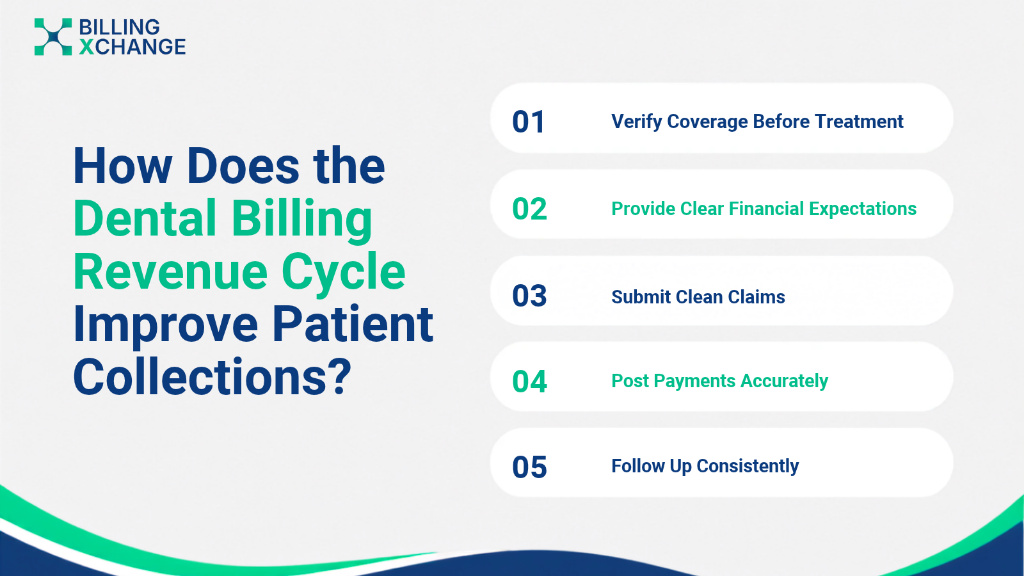
Effective patient collections depend on accurate information, timely communication, and consistent account management throughout the revenue cycle. Similar principles also apply to Medical Billing workflows.
Verify Coverage Before Treatment
- Identifies Coverage Issues Early: Eligibility verification can uncover inactive coverage, deductibles, limitations, frequency restrictions, and other benefit details before treatment begins.
- Improves Cost Transparency: Accurate benefit information helps staff explain estimated insurance coverage and patient responsibility before services are provided.
Provide Clear Financial Expectations
- Clarifies Patient Responsibility: Clear estimates help patients understand what they may owe after insurance processes the claim.
- Improves Payment Readiness: Explaining payment timing, balances, and available payment options makes it easier for patients to address their financial obligations.
Submit Clean Claims
- Reduces Claim Errors: Accurate patient details, payer information, CDT codes, documentation, and required attachments help prevent avoidable claim issues.
- Supports Faster Payments: Clean claims can reduce processing delays and help practices determine the final patient balance sooner.
Post Payments Accurately
- Maintains Accurate Balances: Proper payment posting ensures insurance payments, adjustments, and remaining patient responsibility are reflected correctly.
- Prevents Collection Confusion: Accurate account records reduce duplicate charges, incorrect balances, and unnecessary patient inquiries.
Follow Up Consistently
- Prioritizes Aging Accounts: Practices can organize balances by age, amount, insurance status, and collection priority to focus on accounts that need attention.
- Improves Collection Consistency: A structured follow-up process prevents outstanding balances from being overlooked and supports more predictable patient collections.
What Are Common Collection Challenges in Dental Billing Revenue Cycle?
Even established dental practices can experience collection problems. Effective Dental Billing processes help identify whether issues start with patient information, insurance, claims, payment posting, communication, or follow-up.
| Collection Challenge | Common Cause | Practical Response |
| Unexpected balances | Incomplete benefit information | Verify coverage before treatment |
| Delayed insurance payments | Claim errors | Validate claims before submission |
| Confusing statements | Posting or communication issues | Review balances and simplify statements |
| Growing receivables | Inconsistent follow-up | Use aging-based work queues |
| Patient payment resistance | Limited payment convenience | Provide clear payment options |
| Repeated claim problems | Process weaknesses | Track patterns and correct root causes |
1. Inaccurate Insurance Information
- Outdated policy details or incorrect subscriber information can lead to claim issues, delays, and unexpected patient balances.
- Regular insurance verification helps confirm coverage details and reduces avoidable billing errors.
2. Unclear Patient Responsibility
- Patients may delay payment when they do not understand how insurance payments, adjustments, and coverage affect their final balance.
- Clear explanations of estimates, insurance payments, and remaining responsibility can improve patient understanding and collections.
3. Inconsistent Follow-Up
- Without a defined follow-up process, unpaid balances can remain unresolved and become harder to collect.
- Clear ownership, follow-up timelines, documentation, and escalation procedures help keep outstanding accounts moving.
4. Limited Performance Tracking
- Without measurable data, practices may struggle to identify where collection problems are occurring.
- Tracking collection rates, accounts receivable aging, days in accounts receivable, denial trends, claim acceptance, and outstanding patient balances provides better financial visibility.
Why Choose BillingXchange for Dental Billing Revenue Cycle?
Dental practices need accurate, consistent, and visible financial workflows. BillingXchange supports the complete revenue cycle by coordinating eligibility verification, claim accuracy, payment posting, follow-up, denial resolution, and reporting.
A strong Dental Billing Revenue Cycle approach connects insurance activity with patient responsibility, helping teams identify delayed balances and communicate payment information clearly. Practices can also explore Dental Billing Revenue Cycle Maximizing Your Practice’s Revenue for additional revenue-cycle strategies.
BillingXchange helps dental organizations reduce administrative work, improve account visibility, and maintain a reliable revenue-cycle process. The goal is to strengthen collections while improving staff efficiency and the patient payment experience.
Conclusion
Improving patient collections requires a connected financial process covering accurate patient information, claims, payments, statements, and account resolution. A well-managed Dental Billing Revenue Cycle helps practices identify issues early, explain patient responsibility clearly, and control aging balances.
BillingXchange supports key revenue-cycle activities, including accurate billing, payment posting, follow-up, and reporting. These processes can reduce delays and improve financial visibility. RCM in Dental Billing further explains how revenue-cycle management supports financial performance.
A stronger financial workflow can help your dental practice reduce billing delays, improve balance visibility, and create a more consistent collection process. Contact us today with BillingXchange to discuss how your billing workflow can be strengthened around accuracy, follow-up, and revenue performance.
Frequently Asked Questions
1. What Is the Main Goal of the Dental Billing Revenue Cycle?
The goal is to manage the financial process from patient registration and insurance verification through claims, payment posting, and final balance resolution. A strong Dental Billing Revenue Cycle workflow reduces delays and improves collection consistency.
2. How Can Practices Improve Patient Collections?
Practices can improve collections by verifying insurance early, communicating patient responsibility, submitting accurate claims, posting payments promptly, sending timely statements, and consistently following up on outstanding balances.
3. Why Do Dental Claims Affect Patient Collections?
Insurance claims determine how much treatment costs the payer covers and what remains for the patient. Errors, denials, or delayed processing can postpone accurate balance determination and payment, affecting the Dental Billing Revenue Cycle.
4. Which Metrics Should Dental Practices Monitor?
Key metrics include collection rate, accounts receivable aging, denial rate, days in accounts receivable, payment posting turnaround, outstanding patient balances, and claim processing performance.
5. When Should a Dental Practice Consider Billing Support?
A practice may consider billing support when teams struggle with claim volume, aging accounts, payment posting, denials, follow-up, reporting, or administrative workload. External support can strengthen processes and improve visibility across the Dental Billing Revenue Cycle.

BillingXchange team
Written by the BillingXchange team. We help dental and medical practices reduce denials, accelerate payments, and maximize collections through expert revenue cycle management.