
Building a Resilient Dental Revenue Cycle Management Workflow
On this page
Managing a successful dental practice requires more than excellent patient care. A strong Dental Revenue Cycle Management workflow helps reduce billing errors, speed up reimbursements, improve cash flow, and keep revenue consistent. As insurance requirements become more complex, an organized financial process is essential for dental practices, DSOs, and multi-location clinics.
Accurate Dental Revenue Cycle Management strengthens the payment process by reducing claim denials, improving payment accuracy, and increasing reimbursement rates. It also streamlines operations, enhances the patient experience, and supports long-term financial growth.
What Is Dental Revenue Cycle Management?
Dental Revenue Cycle Management is the complete financial process that manages every patient account from appointment scheduling until the practice receives the final payment. Rather than focusing only on billing, it connects clinical documentation, insurance processing, payment collection, and financial reporting into one streamlined workflow.
An efficient Dental Revenue Cycle Management process helps practices reduce revenue leakage, improve claim accuracy, and maintain healthier cash flow. The workflow generally includes:
- Patient registration
- Insurance eligibility verification
- Treatment planning
- Clinical documentation
- Claim preparation and submission
- Payment reconciliation
- Denial resolution
- Accounts receivable management
Each stage of Dental Revenue Cycle Management depends on the accuracy of the previous one. Even small registration or coding errors can delay reimbursements. Using professional Medical Billing services helps ensure clean claims, faster payments, and improved financial performance.
How Does a Dental Revenue Cycle Management Workflow Work?
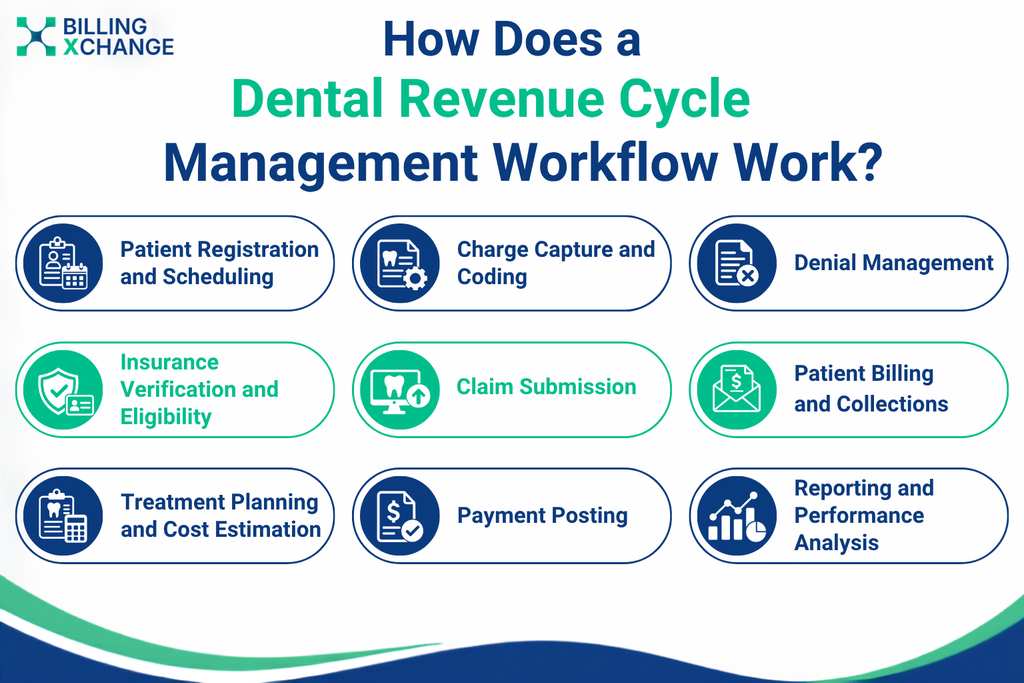
A successful workflow follows a connected process where every department contributes to accurate billing and timely collections.
Key Stages of Dental Revenue Cycle Management
1. Patient Registration and Scheduling
This stage begins when a patient books an appointment. Collecting accurate information helps reduce billing errors and keeps the payment process smooth.
- Collect Accurate Patient Information: Record the patient’s personal, insurance, and medical details correctly.
- Verify Contact and Insurance Details: Confirm contact information and insurance coverage before the visit.
2. Insurance Verification and Eligibility
Insurance verification confirms whether the patient’s dental benefits are active and what treatments are covered.
- Confirm Active Insurance Coverage: Check that the patient’s insurance is valid.
- Check Benefits, Deductibles, and Limitations: Review coverage, deductibles, and treatment limits before treatment.
3. Treatment Planning and Cost Estimation
A clear treatment plan helps patients understand the procedure and expected costs.
- Prepare Transparent Treatment Estimates: Provide a clear estimate of treatment costs and insurance coverage.
- Obtain Financial Consent Before Treatment: Get patient approval before starting treatment.
4. Charge Capture and Coding
Accurate coding ensures insurance claims are processed correctly and quickly.
- Assign Accurate CDT Codes: Use the correct dental procedure codes for every service.
- Reduce Coding Errors for Faster Claims: Review codes carefully to avoid claim rejections.
5. Claims Submission
Submitting accurate claims on time helps practices receive payments faster.
- Submit Clean Claims on Time: Send complete and error-free claims without delays.
- Include Complete Supporting Documentation: Attach all required records, such as X-rays and clinical notes.
6. Payment Posting
Payment posting keeps patient accounts and financial records accurate.
- Record Insurance and Patient Payments: Enter all received payments correctly.
- Reconcile Payments with Claims: Match payments with claims to identify any differences.
7. Denial Management
Managing denied claims helps recover lost revenue and improve future claim approvals.
- Identify and Resolve Claim Denials: Find the reason for denied claims and fix the issue.
- Resubmit Corrected Claims Promptly: Correct errors and resend claims as soon as possible.
8. Patient Billing and Collections
Clear billing makes it easier for patients to pay their balances on time.
- Send Clear and Timely Patient Statements: Share simple and accurate billing statements.
- Offer Convenient Payment Options: Provide flexible payment methods and plans.
9. Reporting and Performance Analysis
Regular reporting helps improve the financial health of the practice.
- Monitor Key Revenue Cycle Metrics: Track claims, collections, and payment performance.
- Identify Opportunities to Improve Cash Flow: Use reports to reduce delays and increase revenue.
An optimized Dental RCM Workflow also helps practices monitor performance, identify revenue gaps, and improve overall financial efficiency.
Benefits of Dental Revenue Cycle Management
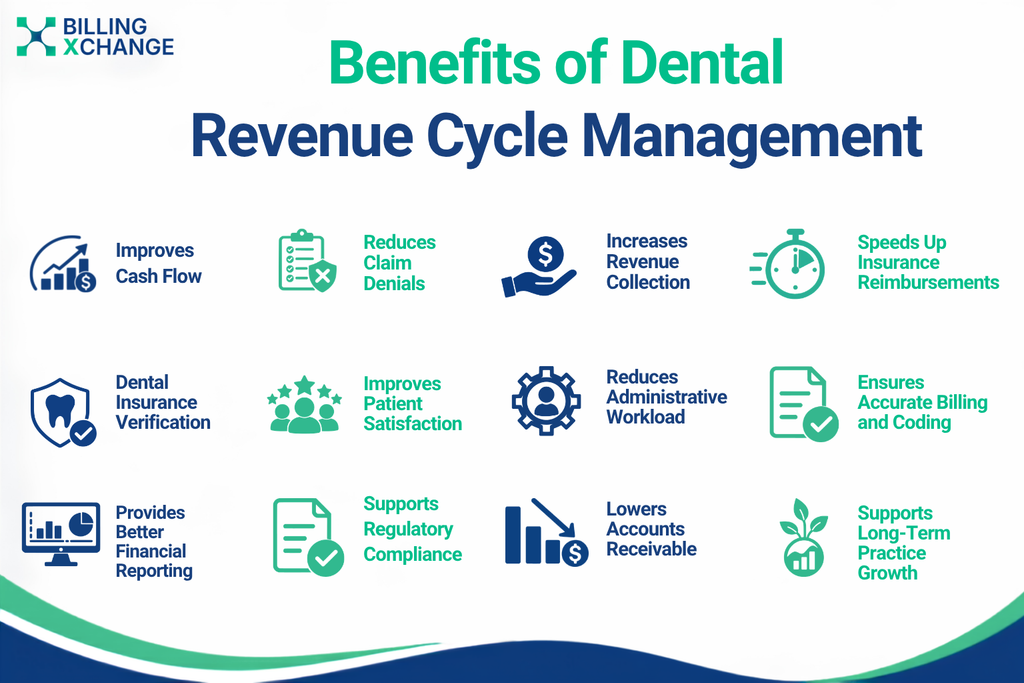
A well-structured workflow helps dental practices improve financial performance while reducing administrative challenges.
1. Improves Cash Flow
A well-managed Dental Revenue Cycle Management process helps practices receive payments on time and maintain a steady cash flow for daily operations.
- Faster claim processing reduces payment delays.
- Supports long-term financial stability with Dental RCM Strategies.
2. Reduces Claim Denials
Submitting accurate claims with complete information reduces the chances of insurance claim denials and payment delays.
- Identifies billing and coding errors before submission.
- Increases first-pass claim acceptance rates.
3. Increases Revenue Collection
Every completed treatment should be billed correctly to maximize practice revenue and reduce missed payments.
- Captures all billable dental services accurately.
- Ensures timely follow-up on unpaid claims.
4. Speeds Up Insurance Reimbursements
Clean and timely claim submission helps insurance companies process payments more efficiently.
- Submits accurate claims without delays.
- Tracks claim status until reimbursement is received.
5. Enhances Dental Insurance Verification
Verifying insurance before treatment prevents billing issues and helps patients understand their financial responsibility.
- Confirms patient eligibility and active coverage.
- Verifies benefits, deductibles, and treatment limitations.
6. Improves Patient Satisfaction
Clear communication about treatment costs and billing creates a better patient experience and builds trust.
- Provides accurate treatment cost estimates.
- Offers simple billing and flexible payment options.
7. Reduces Administrative Workload
Efficient revenue cycle processes reduce manual tasks, allowing staff to focus more on patient care.
- Automates billing and claim submission.
- Reduces paperwork and repetitive administrative work.
8. Ensures Accurate Billing and Coding
Using correct dental codes and documentation improves claim accuracy and reduces payment issues.
- Applies accurate CDT codes for every procedure.
- Minimizes coding errors and claim rejections.
9. Provides Better Financial Reporting
Detailed financial reports help practice owners monitor performance and make informed business decisions.
- Tracks collections, claims, and outstanding balances.
- Identifies areas to improve financial performance.
10. Supports Regulatory Compliance
Following insurance and billing guidelines helps practices remain compliant and avoid unnecessary risks.
- Maintains proper billing documentation.
- Follows payer rules and industry standards.
11. Lowers Accounts Receivable
Regular payment follow-ups help reduce outstanding balances and improve overall cash flow.
- Collects pending payments more quickly.
- Reduces overdue patient and insurance balances.
12. Supports Long-Term Practice Growth
A strong Dental Revenue Cycle Management process provides the financial stability needed for future expansion.
- Supports investment in technology and staff.
- Creates a foundation for sustainable business growth.
According to Dentistry in RCM, dental practices that implement a standardized revenue cycle process often experience stronger cash flow, faster reimbursements, and improved operational efficiency.
Dental Revenue Cycle Overview
| Key Stage | Main Goal | Common Challenge | Expected Result |
| Patient Registration | Collect accurate patient details | Incorrect or incomplete information | Accurate patient records |
| Insurance Verification | Confirm coverage and eligibility | Invalid or outdated insurance | Fewer claim denials |
| Treatment Planning | Estimate treatment costs | Unclear patient responsibility | Better financial transparency |
| Charge Capture & Coding | Apply correct CDT codes | Coding errors | Accurate claim submission |
| Claims Submission | Submit clean claims | Missing documents or errors | Faster reimbursements |
| Payment Posting | Record received payments | Payment mismatches | Updated patient accounts |
| Denial Management | Resolve denied claims | Delayed claim corrections | Higher claim recovery |
| Patient Billing & Collections | Collect patient balances | Late or missed payments | Improved collections |
| Reporting & Analysis | Monitor financial performance | Lack of revenue insights | Better business decisions |
Why Choose BillingXchange for Dental Revenue Cycle Management?
Managing the revenue cycle requires expertise, accuracy, and continuous monitoring. BillingXchange delivers end-to-end revenue cycle solutions designed specifically for dental practices, DSOs, and multi-location organizations.
Our experienced team understands payer guidelines, coding standards, insurance requirements, and reimbursement processes. We help practices reduce billing errors, accelerate collections, and improve overall financial performance.
Why Dental Organizations Partner with BillingXchange:
- Experienced Dental Billing professionals
- Accurate claim preparation and submission
- Faster reimbursement turnaround
- HIPAA-compliant workflows
- Transparent reporting and performance tracking
- Scalable solutions for growing practices
From insurance verification to final payment reconciliation, BillingXchange supports every stage of Dental Revenue Cycle Management with reliable and efficient solutions that allow your team to focus on delivering exceptional patient care.
Conclusion
A strong Dental Revenue Cycle Management workflow helps dental practices improve cash flow, reduce claim denials, and increase operational efficiency. By optimizing every stage from patient registration and insurance verification to claim submission and payment collection practices can maximize revenue and reduce billing errors.
Partnering with BillingXchange provides expert billing support and streamlined workflows that improve collections, increase profitability, and allow your team to focus on delivering exceptional patient care.
Ready to simplify your dental insurance process? Contact us today for BillingXchange accurate and reliable Dental Revenue Cycle Management.
Frequently Asked Questions
1. How does an efficient billing workflow benefit dental practices?
An organized Dental Revenue Cycle Management workflow helps reduce payment delays, improve collections, and maintain a healthy cash flow.
2. Which revenue cycle stage has the biggest impact on reimbursements?
Insurance verification and accurate claim submission have the greatest impact on faster reimbursements and fewer denials.
3. How can dental practices improve first-pass claim acceptance?
Practices should verify patient information, use accurate coding, maintain complete documentation, and submit clean claims on time.
4. What metrics should practices monitor for financial performance?
Key metrics include claim acceptance rate, collection rate, accounts receivable days, denial rate, and reimbursement turnaround time.
5. Why should growing dental practices optimize Dental Revenue Cycle Management?
A streamlined Dental Revenue Cycle Management process improves operational efficiency, supports business growth, and strengthens long-term profitability.

BillingXchange team
Written by the BillingXchange team. We help dental and medical practices reduce denials, accelerate payments, and maximize collections through expert revenue cycle management.